What Is Calisthenics and Building Lasting Strength
- fawad.hasan
- Jan 9
- 7 min read
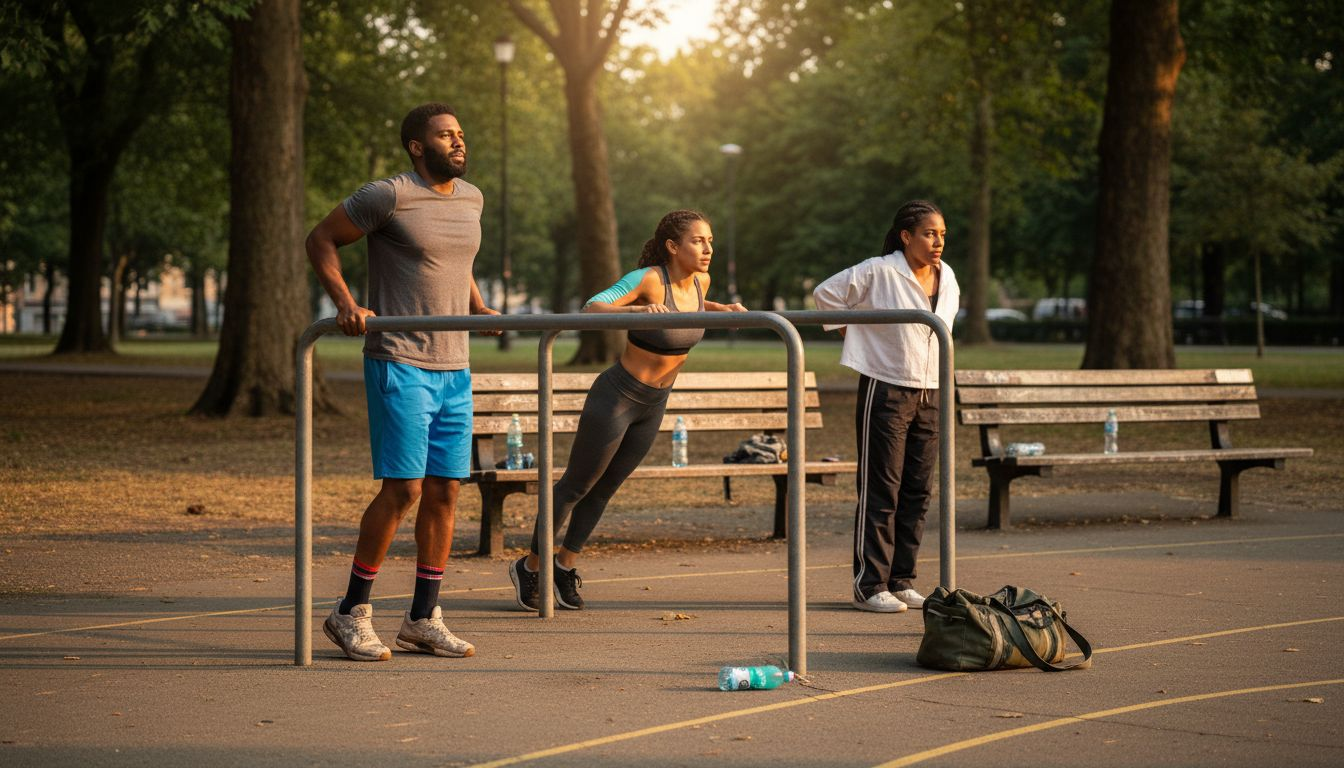
Finding effective fitness routines can feel overwhelming for many British beginners trying to build strength at home. Over 60 percent of new exercisers give up within three months without the right guidance or tools. For those eager to embrace calisthenics, understanding its core principles and reliable equipment options is crucial for lasting results. This overview clears up misconceptions, explains what truly works, and helps you make informed choices that fit a British home environment.
Table of Contents
Key Takeaways
Point | Details |
Principle of Calisthenics | Emphasises functional movement and skill progression using bodyweight resistance, engaging multiple muscle groups for comprehensive strength development. |
Equipment Requirements | Minimal equipment is needed for effective training; a pull-up bar and resistance bands can significantly enhance bodyweight exercises at home. |
Beginner Focus | Master foundational exercises with perfect form before progressing to advanced movements to prevent injury and ensure sustainable development. |
Common Mistakes | Avoid ego-driven training and complex movements before establishing a solid foundation to reduce injury risk and improve overall performance. |
Core calisthenics principles and misconceptions
Calisthenics represents a dynamic fitness approach that transforms your body using nothing more than bodyweight resistance. Unlike traditional gym training that relies heavily on equipment, calisthenics emphasises adaptability and skill progression through intelligent movement patterns that challenge gravity and muscular control.
At its core, calisthenics operates on several fundamental principles that distinguish it from conventional strength training. First, the discipline prioritises functional movement over isolated muscle development. This means exercises engage multiple muscle groups simultaneously, creating integrated strength that translates directly into real-world physical capabilities. Push-ups, pull-ups, squats, and lunges become sophisticated tools for developing comprehensive bodily strength, rather than merely aesthetic muscle building.
Despite its growing popularity, several persistent misconceptions continue to surround calisthenics. Many individuals erroneously believe that significant muscle development requires expensive gym equipment or complex machinery. However, progressive bodyweight training can achieve remarkable strength gains using minimal space and zero additional gear. The key lies in understanding progressive overload techniques: systematically increasing exercise difficulty by adjusting leverage, repetitions, and movement complexity.
Expert Tip: Start your calisthenics journey by mastering foundational movements like standard push-ups and bodyweight squats before attempting advanced variations, ensuring proper technique and gradual skill progression.
Major types and exercise variations
Calisthenics encompasses a rich and diverse array of exercise types that challenge the body through complex, gravity-defying movements. Fundamental bodyweight exercises form the foundation of this dynamic discipline, ranging from basic push-ups and pull-ups to advanced skill-based movements that require exceptional strength and control.
The discipline can be broadly categorised into several key exercise variations. Dynamic movements involve rhythmic, flowing exercises that combine strength and momentum, such as muscle-ups, explosive push-ups, and dynamic pull-ups. In contrast, static holds demand incredible muscular endurance and joint stability, including challenging positions like the front lever, back lever, and planche. These static positions require practitioners to maintain specific body positions against gravity, developing extraordinary isometric strength and body control.
Skill-based progressions in calisthenics offer practitioners a structured pathway to increasingly complex movements. Beginners might start with fundamental exercises like standard push-ups and bodyweight squats, gradually advancing to more intricate variations such as handstand push-ups, one-arm pull-ups, and complex gymnastic movements. The progression typically involves mastering form, increasing repetitions, and then introducing more challenging leverage points and movement complexities.
The following table contrasts dynamic calisthenics movements with static holds for better exercise selection:
Feature | Dynamic Movements | Static Holds |
Main Focus | Explosive strength, agility | Isometric strength, stability |
Example Exercises | Muscle-ups, explosive push-ups | Planche, front lever, back lever |
Skill Progression | Increased speed, complexity | Longer hold times, stricter form |
Primary Benefit | Power and coordination | Endurance and joint control |
Pro Tip: Begin your calisthenics journey by mastering basic movements with perfect form, focusing on controlled execution and gradual progression rather than rushing into complex skill variations.
Essential moves for beginners explained
Learning calisthenics begins with mastering fundamental bodyweight exercises that build core strength, flexibility, and muscular control. Foundational calisthenics moves provide an essential framework for practitioners to develop comprehensive physical capabilities without relying on complex equipment or gym machinery.
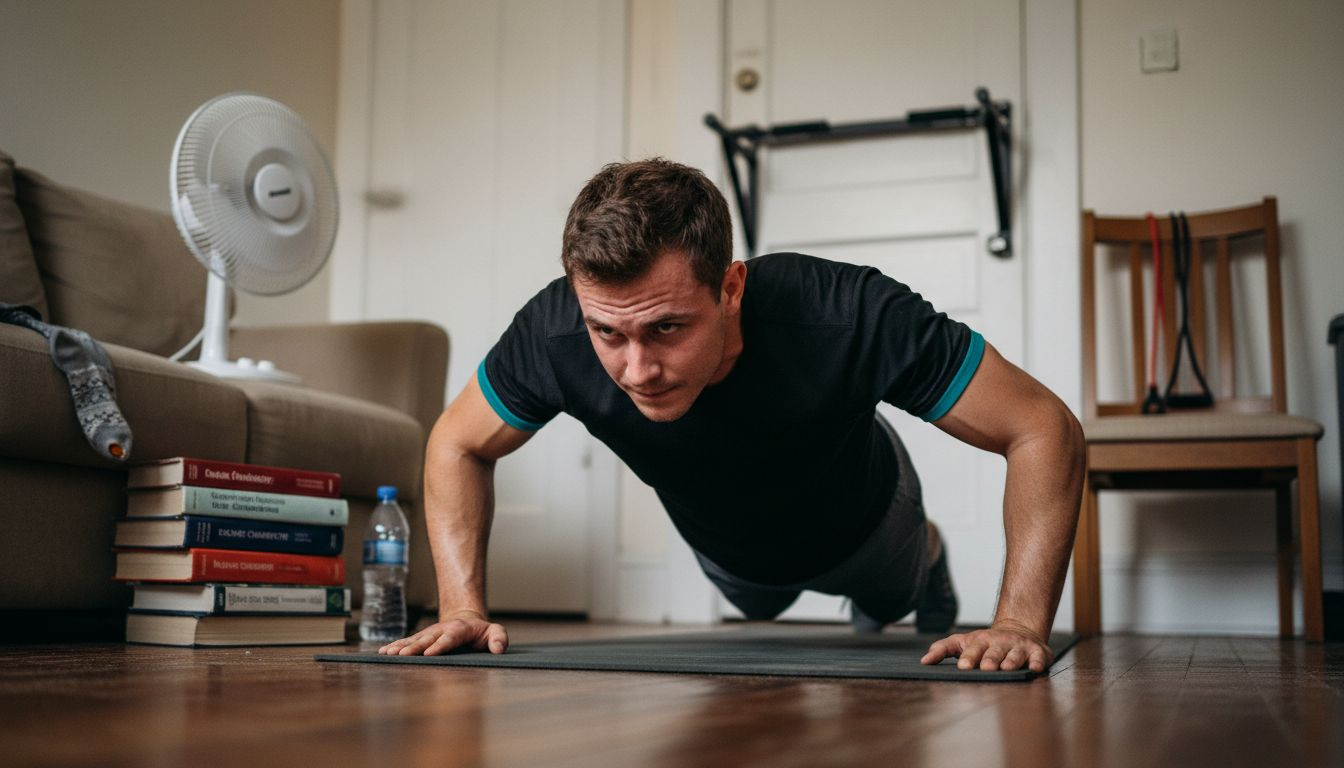
The quintessential beginner exercises form a strategic progression designed to develop full-body strength. Push-ups target chest, triceps, and shoulder muscles, offering multiple variations from knee push-ups to standard and diamond configurations. Squats develop lower body strength, engaging quadriceps, hamstrings, and glutes while improving overall leg stability. Pull-ups challenge upper body strength, specifically targeting back muscles, biceps, and core stability - though beginners might start with assisted variations or negative pull-ups to build initial strength.
Student calisthenics training programmes emphasise a structured approach to skill development. Beginners should focus on perfecting form before increasing repetitions or attempting more complex movements. Handstands, for instance, require significant shoulder strength, balance, and core engagement, making them an advanced skill that demands patient, methodical practice. Each exercise represents a building block, with progression achieved through consistent practice, proper technique, and gradually increasing difficulty.
Below is a summary table of common beginner calisthenics moves, targeted muscles, and recommended starting progressions:
Exercise | Main Muscles Worked | Beginner Progression |
Push-up | Chest, triceps, shoulders | Knee or incline push-ups |
Squat | Quadriceps, glutes, hamstrings | Bodyweight squats |
Pull-up | Back, biceps, forearms | Assisted or negative pull-ups |
Handstand | Shoulders, core, back | Wall-supported handstands |
Pro Tip: Focus on executing each movement with perfect form, prioritising technique over repetition count, and progressively challenge yourself by introducing slight variations as your strength and confidence improve.
Equipment options for home calisthenics
Minimal equipment calisthenics revolutionises home fitness by proving that effective strength training requires little more than your body and a few strategic tools. Contrary to popular belief, building impressive physical capabilities doesn’t demand expensive machinery or extensive gym setups, but rather smart, targeted equipment choices that maximise workout potential.
The fundamental equipment for home calisthenics typically includes a few key items. A pull-up bar stands as the cornerstone, enabling exercises like pull-ups, chin-ups, and hanging leg raises that develop exceptional upper body and core strength. Resistance bands offer versatile training options, providing adjustable tension for both strength and mobility work. Lightweight and portable, they can modify exercise difficulty and assist in progressive skill development. Gym mats provide crucial cushioning and support, protecting joints during floor-based movements and creating a dedicated training space in any home environment.
Additional optional equipment can enhance your training repertoire. University training programmes recommend incorporating tools like parallettes for dip and push-up variations, weighted vests for increasing exercise intensity, and gymnastic rings for advanced bodyweight movements. These supplementary items allow practitioners to continuously challenge themselves and prevent training plateaus by introducing new movement patterns and resistance levels.
Pro Tip: Start with basic equipment and master fundamental movements before investing in advanced gear, ensuring you build a solid technique foundation that will support long-term strength development.
Physical benefits and possible risks
Physical activity guidelines reveal that calisthenics offers a comprehensive approach to fitness, delivering substantial physiological and psychological benefits. The practice transforms body composition, enhances muscular strength, and supports holistic wellness through systematic bodyweight training.
The physiological advantages of calisthenics are remarkably extensive. Muscle development occurs through progressive resistance training using body weight, which builds lean muscle mass and improves overall strength without excessive joint stress. Cardiovascular health receives significant enhancement, with exercises elevating heart rate and improving metabolic efficiency. Importantly, calisthenics develops functional strength - the ability to perform real-world movements with greater ease and reduced injury risk, unlike isolated muscle training typical in traditional weight lifting.
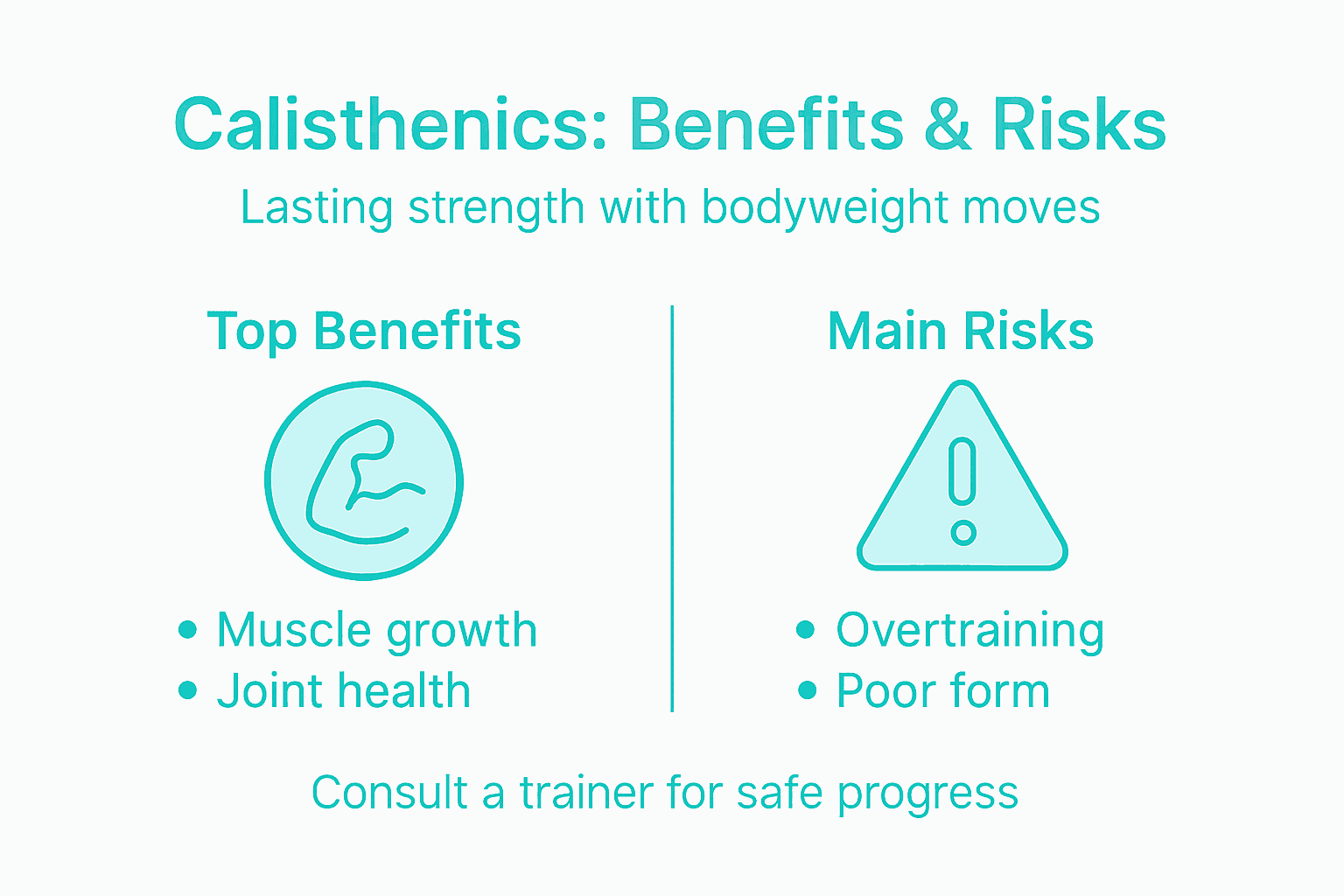
Long-term health management strategies highlight potential risks inherent in bodyweight training. Overtraining, improper technique, and neglecting individual physical limitations can lead to repetitive strain injuries, muscle imbalances, or joint complications. Practitioners must prioritise gradual progression, maintain proper form, and listen to their body’s signals. Pre-existing conditions, age, and personal fitness levels necessitate individualised approaches to prevent potential training-related injuries.
Pro Tip: Consult a healthcare professional before commencing any new exercise regime, and always prioritise technique and controlled movements over repetition volume.
Common mistakes and progress strategies
Calisthenics progression strategies demand a nuanced approach that balances technical precision with patient skill development. Practitioners often stumble by approaching bodyweight training with unrealistic expectations, attempting complex movements before mastering fundamental techniques, which can lead to frustration and potential injury.
The most prevalent mistakes in calisthenics stem from fundamental misunderstandings about skill progression. Ego-driven training represents a significant pitfall, where individuals attempt advanced movements without building requisite foundational strength. This approach typically results in compromised form, increased injury risk, and stunted physical development. Effective progression requires methodical skill-building, focusing on incremental complexity - gradually increasing exercise difficulty by adjusting leverage, repetition volume, and movement sophistication. Each exercise variation should be approached as a deliberate skill to be refined, not merely a physical challenge to be conquered.
University training programmes emphasise structured learning pathways that prioritise technique over rapid advancement. Successful practitioners develop a systematic approach to skill acquisition, breaking down complex movements into manageable progressions. This might involve using assisted variations, focusing on specific movement components, and allowing sufficient recovery between intense training sessions. Tracking progress through consistent practice, maintaining a training log, and periodically reassessing technique ensures continuous, sustainable development.
Pro Tip: Record your training sessions on video to objectively analyse your form, identify technical weaknesses, and track your progression with precision.
Build Lasting Strength with the Right Gear for Your Calisthenics Journey
Mastering calisthenics requires more than just knowledge of progressive overload and perfect technique. Whether you are focusing on foundational moves like push-ups and pull-ups or advancing toward dynamic movements and static holds, having reliable equipment can significantly enhance your training effectiveness and support injury prevention. Common challenges such as achieving proper form, increasing difficulty safely, and improving recovery can be overcome with thoughtful use of quality workout accessories.

Explore a wide selection of premium fitness equipment at PeakFit Store. Equip yourself with sturdy pull-up bars for effective upper body training, adjustable dumbbells for added resistance, and supportive tools that ensure proper recovery after intense sessions. Start your strength-building journey now and experience how trusted gear, combined with smart calisthenics progressions, will help you unlock your full physical potential. Visit PeakFit Store to find all the essentials you need for sustainable fitness success.
Frequently Asked Questions
What are the main principles of calisthenics?
Calisthenics prioritises functional movement, engaging multiple muscle groups simultaneously to develop integrated strength that enhances real-world physical capabilities.
Can I build muscle effectively with just bodyweight exercises?
Yes, progressive bodyweight training can lead to significant muscle development without the need for expensive equipment, by systematically increasing exercise difficulty.
What are some essential beginner calisthenics exercises?
Key beginner exercises include push-ups, squats, pull-ups, and handstands. Each helps to build foundational strength and can be progressed gradually over time.
How can I avoid common mistakes when practising calisthenics?
Focus on mastering fundamental techniques before advancing to complex movements, tracking your progress, and ensuring proper form to prevent injuries and improve skill acquisition.
Recommended


Comments